
Quick answer
Yes, webinars are still relevant in 2026. They remain one of the best ways for experts to reach health audiences at scale, and they give the teams running them direct insight into what their audience thinks. In one survey, 68 percent of healthcare professionals named webinars as their preferred channel for information.
What has changed is the standard. Audiences now expect a webinar to look professional, be easy to join and keep working after the live hour.
Why are webinars still relevant in 2026?
Because they work for both sides of the screen. Audiences still value them, and the teams running them learn things few other channels can tell them.
For the audience
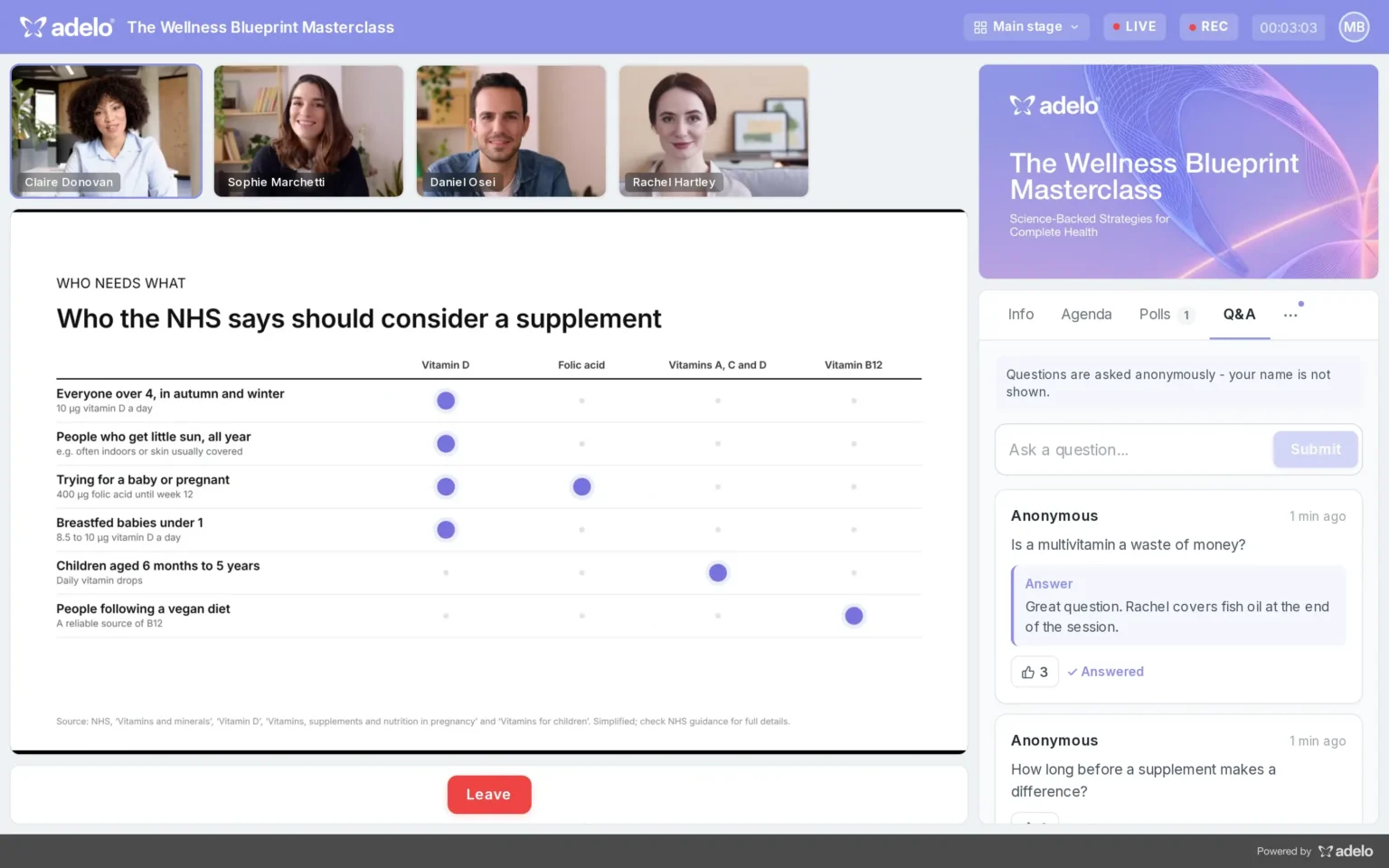
A webinar puts an expert in front of people who can ask questions. Few formats do that as well, or at the same scale. Health audiences value three things in particular:
- Trusted experts. Trust in health comes from people. Audiences want to hear from a named expert, in their own words.
- A chance to take part. They can ask questions, answer polls and join the discussion.
- Learning on their own terms. They can join live without travelling, or watch later.
Healthcare professionals say the same. An Indegene survey of HCPs across major regions found that 68 percent named webinars or webcasts as their most preferred channel for information. Webinars came out top across the regions surveyed.
For the host
A webinar is one of the few channels where your audience talks back, in real time. That makes it a source of strategic insight, not just a way to deliver a message.
- What people actually ask. Questions show what your audience understands, doubts or needs explained next.
- What lands and what doesn't. Poll answers, chat and the moments attention drops show which messages work.
- Patterns over time. Across a programme, recurring questions and objections show where to focus your content, training or next launch.
That kind of insight is hard to get from a survey or a report. It comes straight from your audience, in their own words.
What are webinars used for in health?
Webinars do different jobs for different teams. The common thread is an expert explaining something to people who can ask questions back.
| Use | Who it reaches | Why a webinar works |
|---|---|---|
| HCP education | Doctors, nurses and pharmacists | Experts share new evidence and answer questions, with no travel needed |
| Product launches | HCPs and key stakeholders | One consistent message reaches a large audience at the same time |
| Practitioner training | Pharmacists, nutritionists and aesthetic practitioners | Practitioners learn how to use and recommend a product, then rewatch when needed |
| Expert masterclasses | Practitioners and consumers | A named expert builds trust and credibility for the brand |
| Creator and influencer training | Creators and brand partners | Creators hear the science first, so claims stay accurate |
| Patient programmes | Patients and carers | Clear explanations, with a safe space to ask questions |
| Client programmes | An agency client's audience | The agency runs the programme and hands over a record and reusable content |
Each use has its own goal. Education builds understanding. Training builds confidence. Launches build awareness. The webinar is how the expert reaches people at scale.
What has changed about webinars?
Expectations have risen on both sides of the screen.
Audiences expect more. Health audiences are short of time and see a lot of polished video. They expect a webinar to look professional, be easy to join and be there to watch later.
Hosts expect more back. A recording and an attendance list are no longer enough. Teams want to know what their audience asked and what needs explaining next. They want content they can reuse, and a clear record for review. In health, that means tools built for consent, moderation and potential safety signals, not a general meeting tool.
The live hour is no longer the whole event. For the audience, it's the start of their learning. For the host, it's the start of what the session gives back.
How do you make a health webinar look professional?
Treat the webinar as part of your brand, from the first invitation to the replay. In practice, that means five things.
- Brand every step. Registration, invitations and the event room should carry your brand.
- Give speakers a rehearsal. Experts present better when they have seen the room and tested their set-up.
- Make joining simple. Browser-based access means the audience does not need to download anything.
- Keep interaction in one place. Questions, polls, chat and downloadable resources should sit inside the session.
- Plan the replay. Make the session available on demand, with resources people can use in their own time.
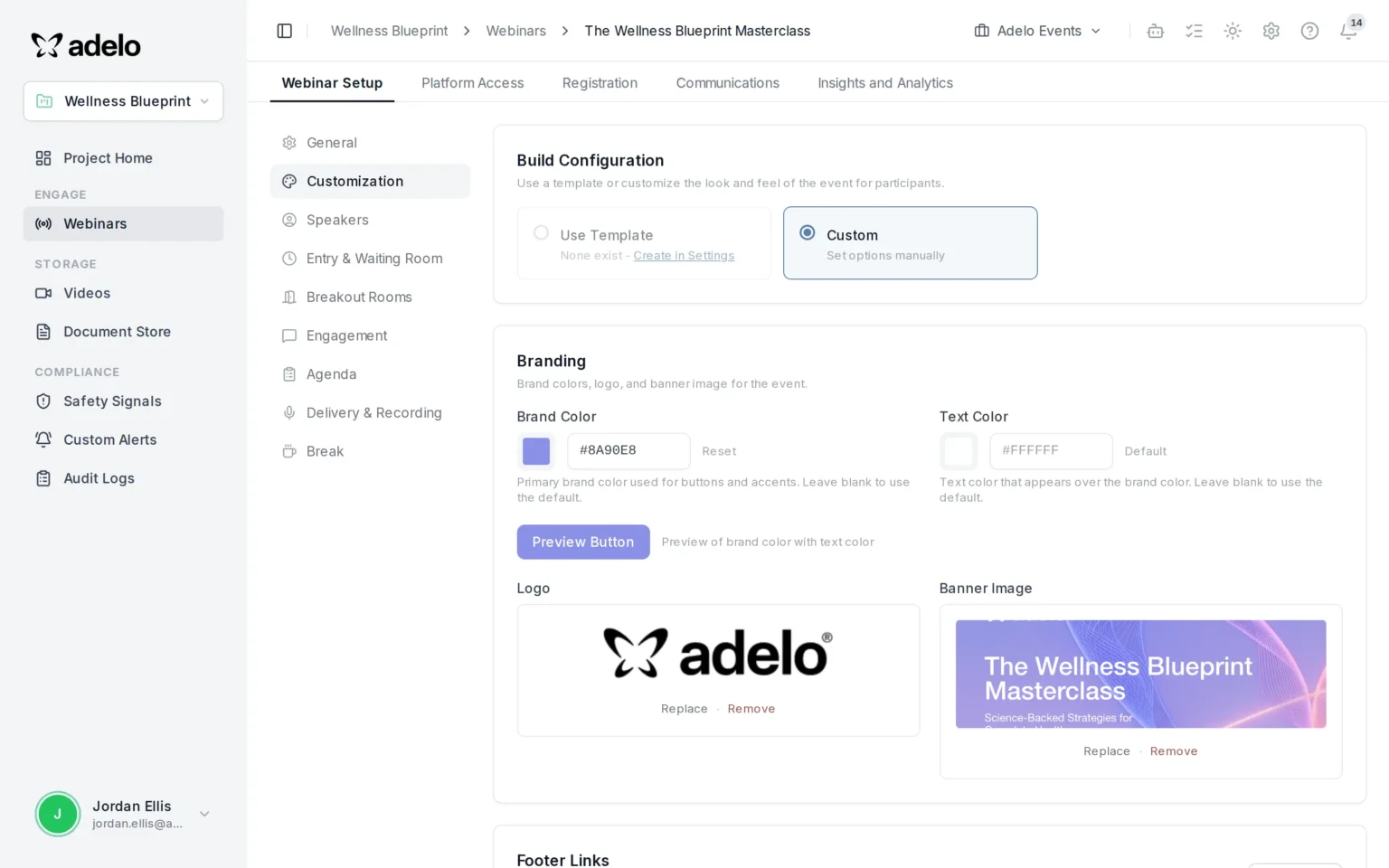
Most of these depend on the platform you choose, not just on how much time your team has to prepare.
Is a webinar only as effective as the platform it runs on?
Largely, yes. The format still works. The platform shapes how the session looks, how the audience takes part and what your team keeps.
Two webinars with the same speaker can feel very different. One looks like your brand, runs smoothly and leaves your team with something useful. The other leaves a recording and an attendance list.
What should a health webinar leave behind?
More than most teams use. One session can produce:
- what the audience asked, and how the experts answered
- poll responses and chat
- who attended, and for how long
- the consent each person gave
- the recording itself
On Adelo, these stay connected to the session. Adelo AI is the engine behind them, giving health teams three extra benefits.
Compliance. Consent is timestamped before anyone enters. Questions and chat can be moderated. Adelo AI can surface potential safety and compliance signals for authorised review. It helps your team check compliance, and your teams remain responsible for final decisions.
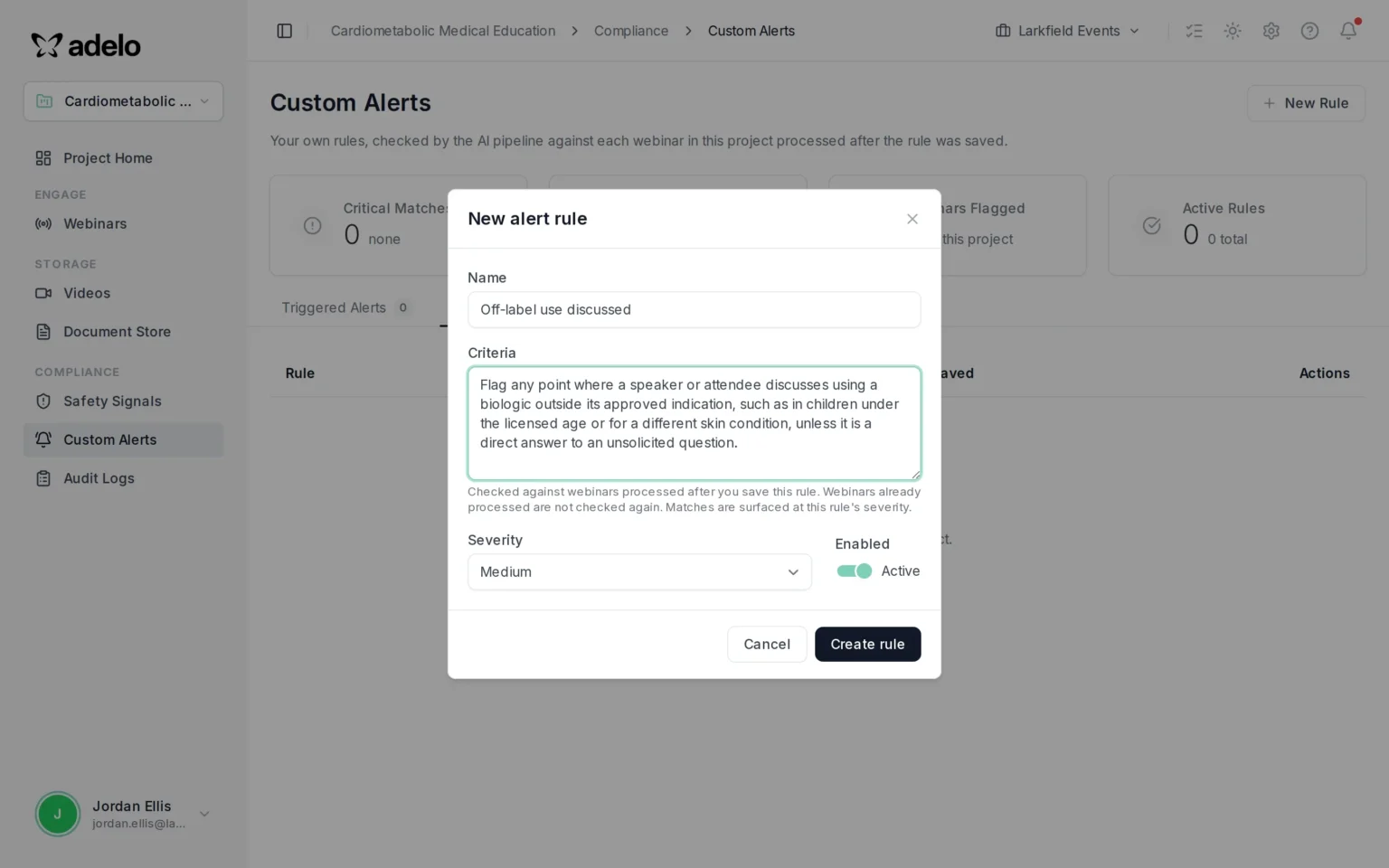
Intelligence. Questions, objections and expert answers become something your team can search. That works across one session or a whole programme, so each session can inform the next. You can also ask a session a question in plain language, and Adelo AI finds the moment.
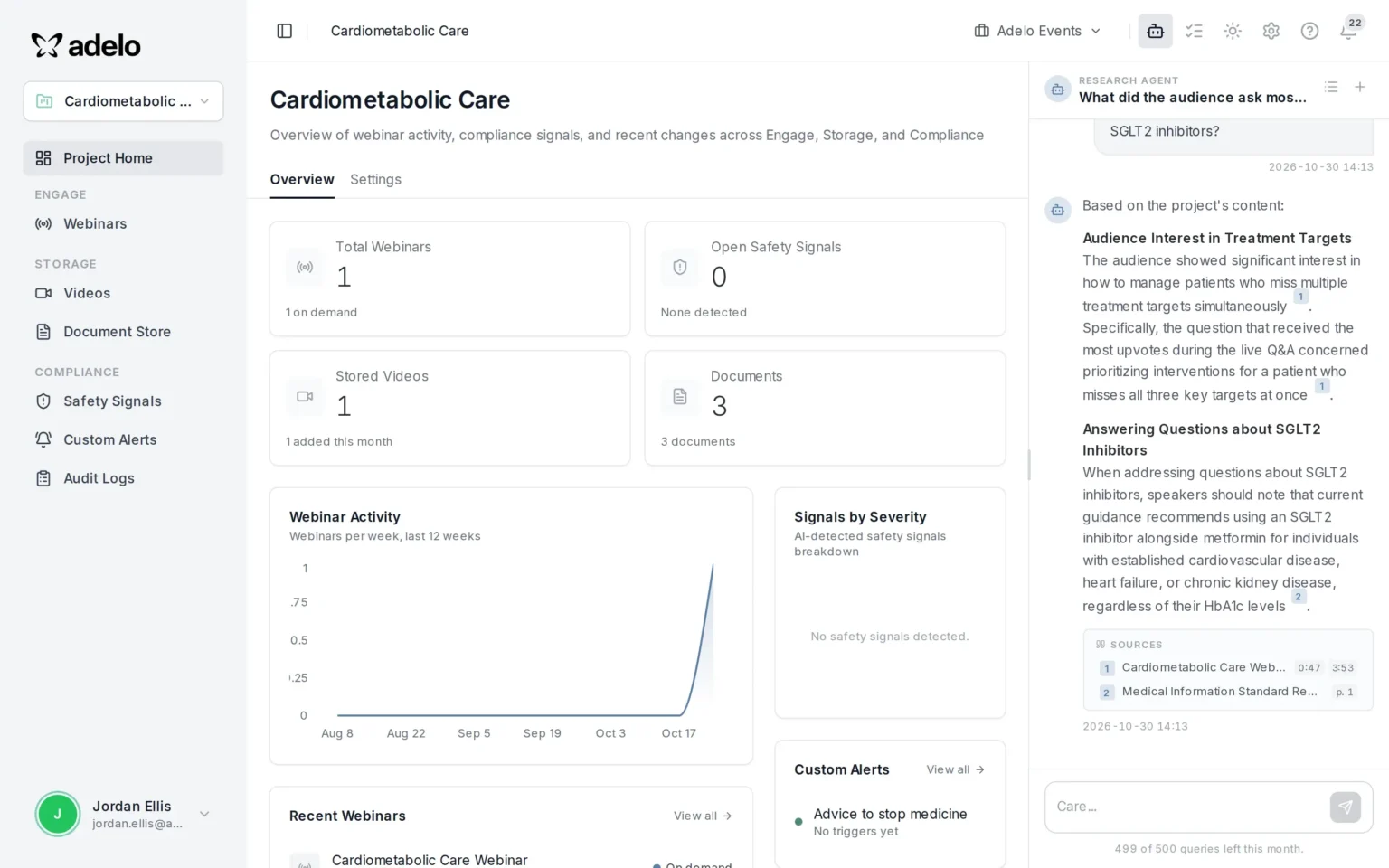
Content. A reviewed session becomes clips, summaries and an on-demand library. Your team publishes only what rights, review and approval allow.
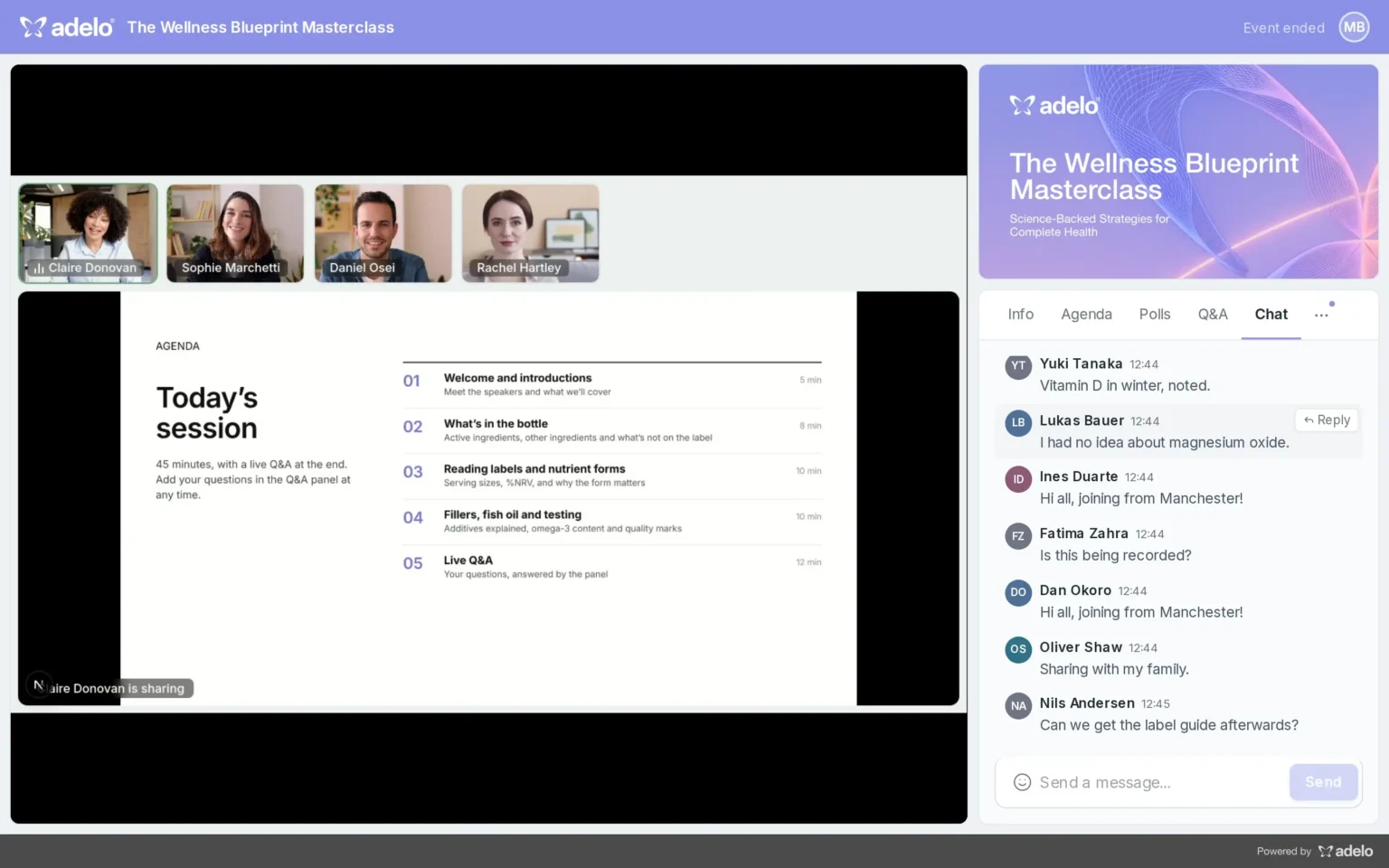
Why does this matter more in health?
In health, live answers carry weight. A slide deck can be approved in advance. A live answer cannot be scripted.
Scrutiny of health claims is also rising. The UK's Advertising Standards Authority (ASA) uses an AI-based Active Ad Monitoring system. It processed more than 60 million ads in 2025, up from about 28 million in 2024. A claim made in a webinar can end up in a clip, a post or an email. Keeping it connected to its original context makes review easier.
There is a commercial reason too. Deloitte analysed 284 US drug launches from 2012 to 2021, and about a third missed analyst forecasts. Inadequate understanding of market needs was among the most common reasons. What HCPs ask in a webinar is part of that understanding.
Are webinars the right format for everything?
No. Match the format to the conversation.
| Format | Best for | What to keep |
|---|---|---|
| Webinar | Expert education, launches, masterclasses and briefings at scale | Questions, polls, chat, attendance and the recording |
| Meeting | Advisory boards, working sessions and expert discussions | Consent, the discussion and who said what |
| 1-to-1 session | HCP discussions, expert interviews and consultations | The conversation and its follow-up |
| On-demand video | Education people take in their own time | Resources, polls and questions from the replay |
How do you choose a webinar platform for a health team?
Start with seven questions:
- Does it look like your brand, from the invitation to the replay?
- Can speakers rehearse before they go live?
- Can the audience join from a browser, with no download?
- Does it capture consent before anyone enters?
- Can your team moderate questions and chat during the session?
- Can you search what the audience asked, across sessions, afterwards?
- Can you easily turn your webinar into reviewed on-demand content?
Adelo, the professional video platform for health, was built around these questions.
Try it on your next webinar. Start your 14-day free trial, with no credit card. Or book a demo and see how Adelo applies to your programme.