Across health tech, regulators decide what a product is by what the company says about it. The FDA's 2026 wellness guidance made that explicit for wearables, and the same logic has long governed supplements and health apps. The risk now sits with communication, and more of it is spoken, live, by people who don't work for you.
The Adelo teamAdelo Insights
Published 3 November 2026
An Adelo Insights essay on health tech and the expert voice
For years the hard question in wearables was "what can the sensor measure?" In 2026 it became "what are we allowed to say about it?", a question supplement and app companies have lived with for decades. It is a bigger shift than it sounds, because a few engineers control the sensor while hundreds of people speak the words.
1
How a sentence changed a product's legal status
Fig. 1The timeline
How the WHOOP blood pressure case unfolded
FDA · MobiHealthNews · Covington
In July 2025, the FDA sent WHOOP a warning letter over Blood Pressure Insights. The letter is worth reading closely, because it shows how the agency thinks. It concluded the feature's purpose was to estimate blood pressure, which is closely tied to diagnosing high or low blood pressure. It pointed to WHOOP's own statements linking blood pressure to sleep, to a color-coded gauge that implied a target range, and to users who said they were using the feature to monitor hypertension. And it said the disclaimers did not outweigh the design.1
Six months later, on January 6, 2026, the FDA revised its General Wellness guidance. Non-invasive wearables that estimate blood pressure, blood glucose, blood oxygen, heart rate and heart rate variability can now qualify as wellness products, provided the intended use is strictly wellness-focused.2 The guidance lists what pushes a product back over the line: references to diseases or clinical thresholds, alerts that prompt clinical action, claims of clinical accuracy or equivalence, and values that mimic clinical ones without validation.2 The FDA later closed the WHOOP letter after the company changed the feature and its labeling.3
Fig. 2The line
Three ways to describe the same blood pressure reading
Based on the factors in FDA's January 2026 guidance · illustrative wording
2
The same line runs through every health product
Wearables are the newest category to meet this rule, and among the oldest to live with it are supplements. Under US law a supplement can make a structure/function claim, such as "supports restful sleep", without FDA approval, but the label must carry a disclaimer that the FDA has not evaluated the claim and that the product is not intended to diagnose, treat, cure or prevent any disease, and the company must notify the FDA within 30 days of marketing it.6 Say the supplement treats insomnia and it is legally a drug.
Apps sit on the same line. Natural Cycles became the first app cleared by the FDA as a method of contraception in 2018, through the De Novo route, on clinical data from 15,570 women.7 Big Health's SleepioRx, a digital course of cognitive behavioral therapy for insomnia, was cleared in 2024 as a prescription device.8 Each company decided to make the treatment claim and did the work to support it. A cycle tracker that says it "helps you understand your cycle", or a sleep app that "helps you wind down", has chosen the other side of the line, and has to stay there in everything it says.
Product
A wellness claim
Where it crosses the line
Wearable
"Your overnight trend was above your baseline"
"This can tell you if you have hypertension"
Supplement
"Supports restful sleep", with the FDA disclaimer
"Treats insomnia" or "lowers blood pressure"
Sleep or mental health app
"Helps you wind down at night"
"Treats insomnia or anxiety", unless cleared as a device
Cycle or fertility app
"Helps you understand your cycle"
"Prevents pregnancy", unless cleared as a device
At-home test or glucose sensor
Readings and trends, with advice to see a clinician
Diagnosing a condition from the result in marketing or on air
The FTC watches all of it. In April 2023 it sent notices to about 670 companies selling supplements, functional foods, OTC drugs and homeopathic products, reminding them that health claims need competent and reliable scientific evidence and that a claim to treat a serious disease needs at least one well-controlled human clinical trial. Breaking those rules after receiving a notice can cost up to $50,120 per violation.9
3
Spoken words count
Intended use has never been only about the label. It is established by what a company and its representatives say and do. That used to mean brochures, websites and sales reps. Today it also means a launch livestream, a podcast interview with the CEO, an ambassador's post and, most dangerously, an expert answering a live question from a customer.
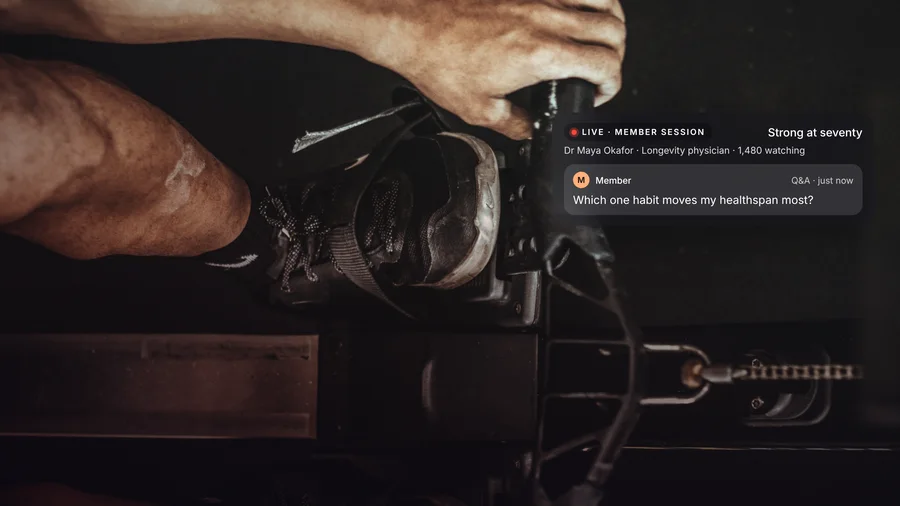
Picture a member asking the sleep physician on your live session, "So can this tell me if I have hypertension?" The natural, helpful answer is "it can give you a good idea." That sentence, recorded and clipped, names a disease and a diagnostic purpose. It is exactly the kind of statement the FDA cited in the WHOOP letter, and it is now on the record.1 The Federal Trade Commission adds a second layer: its 2022 Health Products Compliance Guidance expects health claims to be backed by competent and reliable scientific evidence, and holds expert endorsers liable alongside the brand.4
"So can this tell me if I have hypertension?" One unguarded answer can undo careful labeling.
Adelo Insights · Part 3
4
Govern spoken content like promotion
Pharma has run live, spoken, expert-led communication under strict rules for decades, and its playbook translates directly. Promotional material is certified before use. Speakers are trained and briefed on approved language. Questions about unlicensed uses are held and answered privately. Everything is recorded and reviewable. The 2024 ABPI Code even requires staff to be fully conversant with the pharmacovigilance rules relevant to their work.5 Those rules are a large part of why pharma can run thousands of expert sessions a year without each one becoming a legal risk.
Pharma does this
The health tech equivalent
Certifies promotional material before use
Approved language for every feature, agreed before launch
Briefs and trains speakers
Every expert and ambassador briefed on the three sentences never to say
Holds off-label questions for private answers
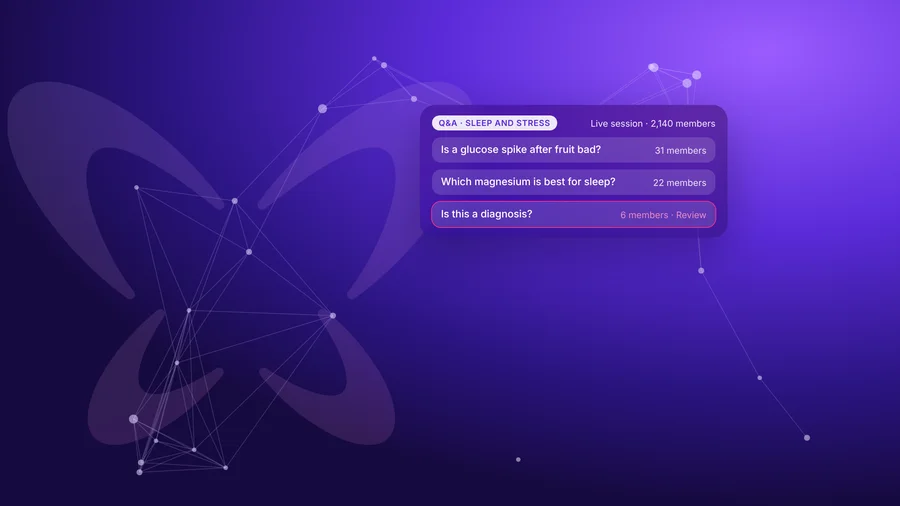
Moderates live questions; "is this a diagnosis?" is answered carefully, in writing
Records everything
Transcript and recording for every session, searchable
Reviews before anything is reused
Clips and on-demand versions reviewed before they go out
Keeps an audit trail
Who said what, who flagged it, who decided
Write the approved sentences for each feature, and the forbidden ones. Give both to every speaker.
Moderate live Q&A so a question about a diagnosis is read by a person before it reaches the room.
Flag live, review the same day. A host should be able to flag a sentence as it is said.
Search the archive when guidance changes. In January 2026 every wearable company should have been able to find every recorded mention of "blood pressure" in an hour. A supplement brand should be able to do the same for "cure" or "treat".
A company that can show how it governs its claims can afford the bolder launch. In 2026 the FDA opened the door to blood pressure, glucose and HRV estimates in wellness products, and supplement and app makers have been working along the same line for years. Walking through it safely comes down to communication, which a company can plan, train for and record.
Frequently asked questions
What health claims can a wearable, supplement or health app make?
It can describe general wellness, such as supporting sleep or fitness, without FDA clearance. Once it claims to diagnose, treat or prevent a disease, it is regulated as a medical device or drug. Regulators judge this by everything the company and its representatives say, including what experts say live, so spoken claims need the same review as written ones.
What changed in the FDA's 2026 General Wellness guidance?
On January 6, 2026, the FDA said non-invasive wearables that estimate blood pressure, blood glucose, blood oxygen, heart rate and heart rate variability can qualify as wellness products, provided their intended use stays strictly wellness-focused. The guidance lists what pushes a product back over the line: disease references, clinical thresholds, alerts that prompt clinical action, claims of clinical accuracy, and outputs that mimic clinical values without validation.
Why did the FDA send WHOOP a warning letter?
In July 2025 the FDA objected to Blood Pressure Insights, saying blood pressure estimation is closely tied to diagnosing hypertension and "is not a low-risk function." The FDA later closed the letter after WHOOP changed the feature and its labeling.
Does what a company says in a livestream or podcast count as a claim?
Yes. Intended use is established by the label and also by what a company and its representatives say and do. A launch livestream, a podcast interview, an ambassador's post or an expert's answer in a live Q&A can all establish intended use.
What can a supplement say without FDA approval?
A structure/function claim such as "supports restful sleep", with a label disclaimer that the FDA has not evaluated it and that the product is not intended to diagnose, treat, cure or prevent any disease. The company must notify the FDA within 30 days of marketing. A claim to treat a disease makes it a drug.
What can a wearable say about blood pressure?
It can describe a trend against your own baseline and suggest a conversation with a professional, without naming a disease, using a clinical threshold or calling a reading abnormal. Saying a reading is "elevated" or that the device can tell you whether you have hypertension crosses the line.
How should a health tech company govern spoken content?
The way pharma governs promotion: brief every speaker on approved language, moderate live questions before they reach the audience, flag risky phrasing live, keep recordings and transcripts, review before anything is clipped, and keep an audit trail so you can show what was said and what was done about it.
Adelo Insights are written by the Adelo team, the professional video event platform for health. They draw on the sessions pharma, agency and consumer health teams run on Adelo every week, and on the research cited in each essay.




 Adelo Insights · Health tech and the expert voice