Health tech · Part 5 of 11 · November 2026 · 5 min read
Health tech · Part 5
Why doctors look at wearable data and still don't use it
The 2026 AMA survey points to confidence and liability, and health tech can help with both.
The clinician is the next distribution channel for consumer health tech. What stands in the way is less often FDA clearance than whether a doctor feels confident interpreting the data, and safe acting on it.
The Adelo teamAdelo Insights
Published 3 November 2026
An Adelo Insights essay on health tech and the expert voice
The AMA and Medscape surveyed 2,222 physicians in the US, Canada, France, Germany, Spain and the UK in 2026. Ninety-seven percent review patients' wearable data in some capacity. Yet no country reported integration into routine workflow above 6%.1 Nearly every doctor is looking at the data, and almost none are acting on it as part of routine care.
Fig. 1The gap
Physicians look at wearable data far more often than they use it
AMA and Medscape, International Physician Survey on Consumer Wearables, 2026
1
What holds doctors back
The survey is unusually clear about why. Physicians who have integrated wearable data report more confidence interpreting it and more trust in its accuracy. Those who haven't cite liability, false positives and workload.2 In the US, 43% are very or extremely concerned about medical-legal liability; in France it is 53%.2 Payment alone doesn't fix it: France has a payment pathway for wearable data and the lowest integration rate of the six countries.3
Demand is there on both sides. One in five physicians overall, and one in three in the US, get weekly requests from patients to review their wearable data.2 Cardiologists and endocrinologists are furthest ahead: 93% and 91% review the data at least sometimes, and cardiology has the highest workflow integration at 11%.2 Oura's Fullscript partnership puts its data in front of 125,000 healthcare providers.4 Wearables are only part of it. Patients now arrive with readings from over-the-counter glucose sensors, results from home blood panels and a list of the supplements they take, and Function Health alone says it has run more than 50 million lab tests since 2023.5 The channel is opening, but clinicians still lack a reason to trust themselves with what patients bring.
43% of US physicians are very or extremely concerned about liability when using wearable data.
AMA and Medscape, 2026
2
What would change their minds
Asked what evidence would raise their confidence most, physicians gave a clear answer: randomized trials and peer-reviewed studies, ranked first by 60% of those already using wearable data and 57% of those not yet using it. Real-world evidence came second at 18% and 14%; society guidelines third.2 For a health tech company the lesson is uncomfortable but useful: a marketing claim will not move a doctor, and a published study explained by a credible peer might.
3
What the Apple Heart Study did for the smartwatch
The best example of a consumer device earning clinical attention is an old one. In November 2019, Stanford Medicine published the Apple Heart Study in the New England Journal of Medicine. It enrolled 419,297 people in the US. Over 117 days, 2,161 of them, 0.52%, received an irregular rhythm notification. Among those who then wore an ECG patch and returned usable data, 34% had atrial fibrillation, and when the watch notified someone while they were wearing the patch, the patch confirmed atrial fibrillation 84% of the time.6
The numbers mattered less than where they appeared. A cardiologist could read the study in the journal they already trusted, argue with its limits, and hear it discussed at conferences by peers with no reason to sell a watch. That is exactly the evidence physicians in the AMA survey said they wanted most. Most health tech companies will never run a study of that size. All of them can publish what they have, and pay for the hard part: having a credible clinician explain it, live, to the doctors who will be asked about it.
4
Build medical affairs before clinician sales
Pharma learned long ago that doctors do not want to be sold to by the people who want to sell to them. So it built medical affairs: a scientific function, separate from sales, whose job is to educate clinicians on the evidence, answer their hard questions, run advisory boards and feed what it learns back into the company. Every health tech company that wants the clinic as a channel needs the same function, even if it is two people at first.
Medical affairs does
For a health tech company that means
Educates clinicians on the science, separate from sales
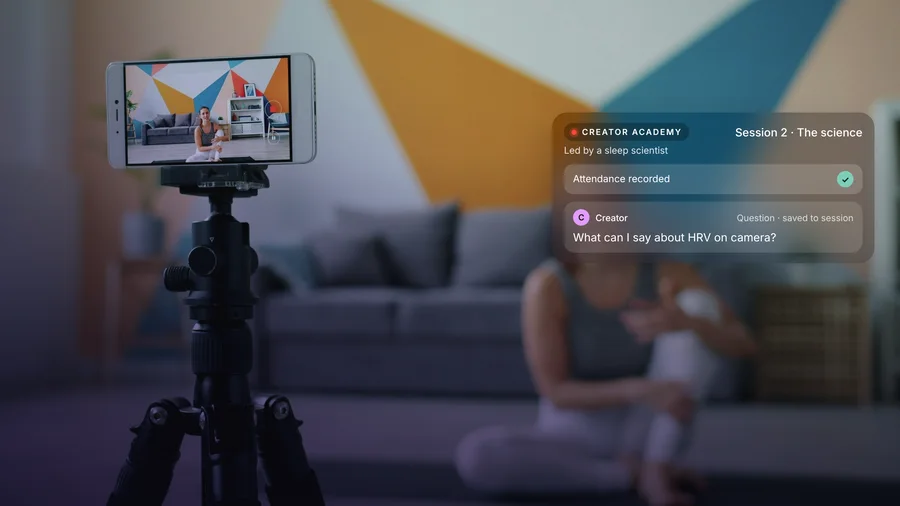
Live sessions where a peer explains what a sleep score, a glucose curve or a home blood panel does and does not mean
Runs advisory boards
A board of cardiologists and endocrinologists before launch, with votes and objections on the record
Answers unsolicited scientific questions
A medical information route for "is this accurate enough to act on?"
Publishes and explains evidence
The validation study, then a session walking clinicians through it
Captures insight for the company
Every clinician question and objection, kept as research
Start with the specialties already leaning in. Cardiology and endocrinology use the data most and are most likely to integrate it in the next year.
Teach what a metric doesn't mean as carefully as what it does. False positives are where confidence breaks, and liability fear begins.
Run clinician advisory boards before each launch, and keep a record of every objection, because those objections tell you what to build next.
Address liability head-on with clear intended-use guidance and honest accuracy data. Silence reads as risk.
Publish the study, then teach it. Doctors ranked randomized trials as the evidence most likely to raise confidence. A study nobody explains changes nothing.
The health tech companies that reach the clinic will not be the ones with the best sensor or the longest test menu. They will be the ones a cardiologist feels safe citing, because someone took the time to teach her what the data means, and what it doesn't.
Frequently asked questions
Do doctors use wearable data?
In the 2026 AMA and Medscape survey of 2,222 physicians in six countries, 97% review patients' wearable data in some capacity, yet no country integrates it into routine clinical workflow above 6%. Cardiologists and endocrinologists use it most.
What stops doctors using wearable data?
Liability, false positives and workload. In the US, 43% of physicians are very or extremely concerned about medical-legal liability. Physicians who have integrated the data report more confidence interpreting it and more trust in its accuracy; non-integrators cite the risks.
What evidence would make doctors trust wearable data?
Randomized trials and peer-reviewed studies, ranked first by 60% of physicians who already use wearable data and 57% of those who don't. Real-world evidence and society guidelines come a distant second.
What is medical affairs for health tech?
The function pharma uses to educate clinicians about the science, kept separate from sales: clinician education on what a metric means and doesn't, advisory boards, published evidence, clear intended-use guidance and a record of every objection clinicians raise.
How should a health tech company engage clinicians?
Start with the specialties already leaning in, teach what the metric doesn't mean as carefully as what it does, run advisory boards before launch, address liability directly, publish the study and then teach it, and capture every question clinicians ask as research.
Adelo Insights are written by the Adelo team, the professional video event platform for health. They draw on the sessions pharma, agency and consumer health teams run on Adelo every week, and on the research cited in each essay.




 Adelo Insights · Health tech and the expert voice